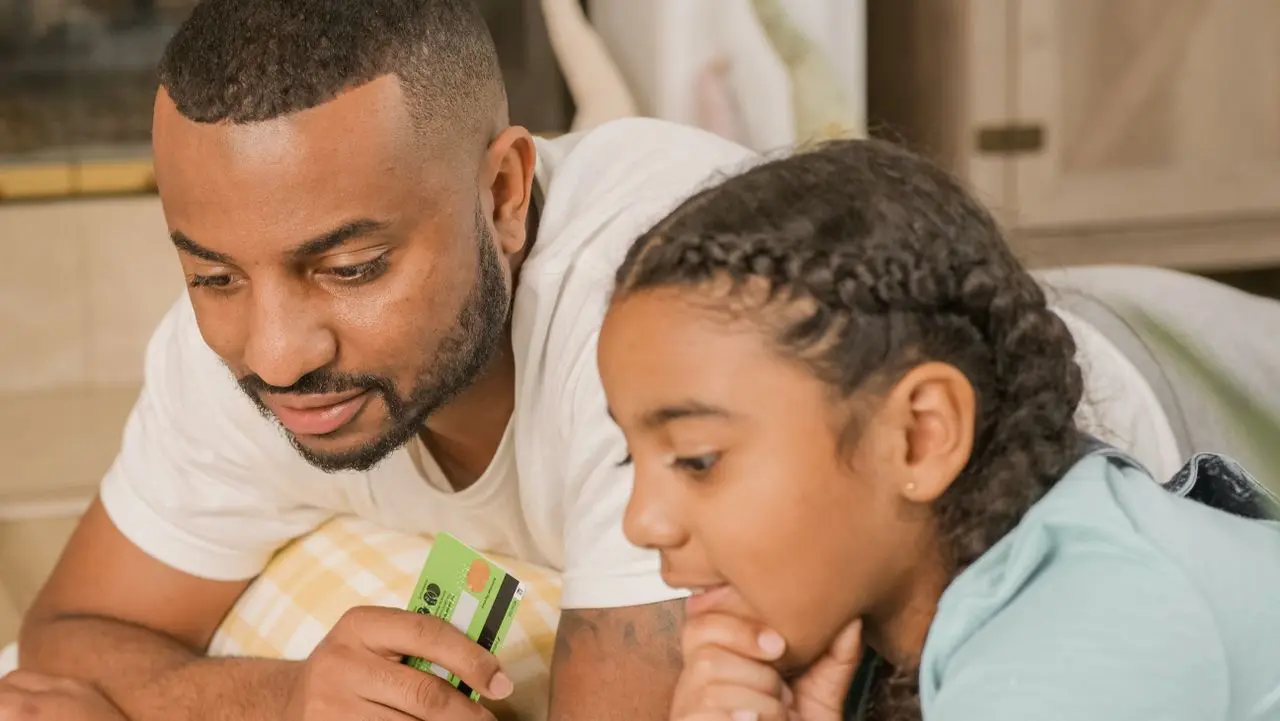
Money is one of the topics that causes the most conflict in relationships. Not because couples have incompatible values or because one spends too much and the other is too frugal, though that happens sometimes too. The most common problem is both simpler and harder to solve: they have never learned to talk about money calmly, in a structured way, without the conversation turning into an argument about who is right.
Money triggers very deep emotions: fear of scarcity, the feeling of control or lack of it, shame, pride, mistrust. When two people with different financial histories form a couple, those emotions collide even when neither of them intends it. The good news is that talking about money as a couple is a skill that can be learned, and this article explains how.
Why talking about money as a couple is so hard
Before getting into the how, it helps to understand the why. Most people reach adulthood without ever having had a single structured conversation about money in their family of origin. Money was a topic to be avoided, one that generated tension, or simply was not discussed. That creates unconscious beliefs and habits that activate automatically when a couple tries to address their shared finances.
On top of that, each person has a different emotional relationship with money. For some it represents security and there is never enough of it. For others it is a means to enjoy the present and saving seems like a waste. Neither view is right or wrong: they are the result of different experiences. But when they coexist without anyone having put them on the table, conflict is almost inevitable.
The problem is not having different views about money. The problem is not knowing we have them or how to manage them together.
When to have the conversation: timing matters
One of the reasons conversations about money go badly is the moment at which they happen. Most occur reactively: someone sees a bank statement, an unexpected bill arrives, or one partner makes a purchase the other considers excessive. In that context of immediate tension, any conversation about money easily becomes an argument about that specific event rather than about shared finances in general.
The alternative is to choose the moment proactively. Proposing a conversation about money when there is no urgency and no active conflict changes the tone completely. It is not "we need to talk about that purchase you made" but "when can we sit down and review how we are managing our finances?" The difference seems small but the effect is enormous.
The best time is a calm moment, without rushing, in a neutral setting. Not in bed before sleeping, not in the car on the way somewhere, not immediately after an argument about something else. A coffee at the weekend, a free afternoon, a moment chosen in advance by both partners.
How to start the conversation without putting the other person on the defensive
The way a money conversation opens largely determines how it will end. Some concrete guidelines that reduce the probability of it turning into conflict.
Speak from your experience, not from judgment. "I feel anxious not knowing how much we have saved" opens a conversation. "You never know how much we have saved" opens an argument. The first talks about what you feel. The second accuses the other person.
Start with shared goals, not with problems. Do you want to buy a house? Travel more? Have children? Retire earlier? Shared goals are the common ground from which any financial conversation can be built. Specific problems (who spends more, how expenses are split) are much better addressed when there is a framework of shared goals to give them meaning.
Avoid absolutes. "You always spend too much" and "you never save anything" are phrases that trigger immediate defensiveness. Talking about specific recent situations is more productive: "last month we spent quite a bit more than expected on leisure — what do we do next month?"
Topics to cover in the conversation
A complete conversation about couple finances does not need to be resolved in a single session. What matters is that it eventually covers these areas:
- Individual income and expenses: knowing how much each person earns and spends is the starting point. Not to judge, but to get a real picture of the joint situation.
- Shared management model: joint accounts, separate accounts or a mixed model? There is no universally correct answer. The one that works is the one both people understand and consciously accept. See the article on how to manage finances as a couple for a detailed breakdown of each model.
- Shared expenses: what counts as a shared expense and how it is split. Equally? Proportional to income? Who pays for what?
- Savings goals: defining shared savings goals together and the timeline to reach them.
- Emergency fund: whether they have one, how much it covers and whether it meets both partners' real needs. If they do not have one, when and how to build it. See the guide on emergency funds.
- Personal spending: what margin each person has to spend on their own things without having to justify it or ask permission.
Mistakes that turn conversations into arguments
- Mixing money with other conflicts. If there is tension for other reasons (work, family, parenting), money conversations become contaminated. If you notice the argument is no longer about money, it is better to stop and return to the topic another time.
- Looking for who is right. In couple finances there is no objective truth about how much to spend on leisure or how much to save. There are decisions that both people need to make together. The goal is not to win the debate: it is to find an approach that works for both.
- Talking about the past without proposing changes for the future. Reviewing what went wrong without proposing anything concrete to do differently resolves nothing and generates resentment. Every conversation should end with at least one concrete decision.
- Avoiding the topic because "we'll talk about it later". Conversations that are postponed indefinitely become conflicts when the situation becomes urgent. Regularity matters more than depth: a brief conversation every month is more useful than a big argument every six months.
The most important conversation is not the first one: it is the one that comes after. Talking about money as a couple is not a one-off event but a regular practice. Couples who manage their finances well are not those who share the same values about money from the start: they are the ones who have learned to discuss their differences regularly enough to adjust course before problems accumulate.
When financial styles are very different
It is common for one partner in a couple to be more of a saver and the other more of a spender, or for one to manage money in a very detailed way and the other more intuitively. These differences are not a problem in themselves. The problem arises when they are interpreted as flaws in the other person rather than as different styles that can complement each other.
The saver can bring discipline and foresight. The spender can remind the other that money also exists to be enjoyed. The one who keeps detailed records can handle the monthly financial review. The one who prefers a broader view can bring perspective when the other gets lost in the details.
The key is not for both people to be identical in their relationship with money, but for both to understand and respect the other's approach and to have agreed on a system that works for both even if neither manages it exactly as they would alone.
Building a shared financial routine
Couples who manage money well do not do so because they are especially good with finances. They do it because they have established a regular routine for talking about it. A monthly conversation of 20 to 30 minutes to review the month's expenses, adjust the family budget and check progress on shared goals is enough to keep couple finances on track.
This routine does not need to be formal or tedious. Over time it becomes a habit that almost runs itself, and the benefits go well beyond finances: a couple who has learned to talk about money without it ending in an argument has developed a communication skill that applies to many other areas of the relationship.